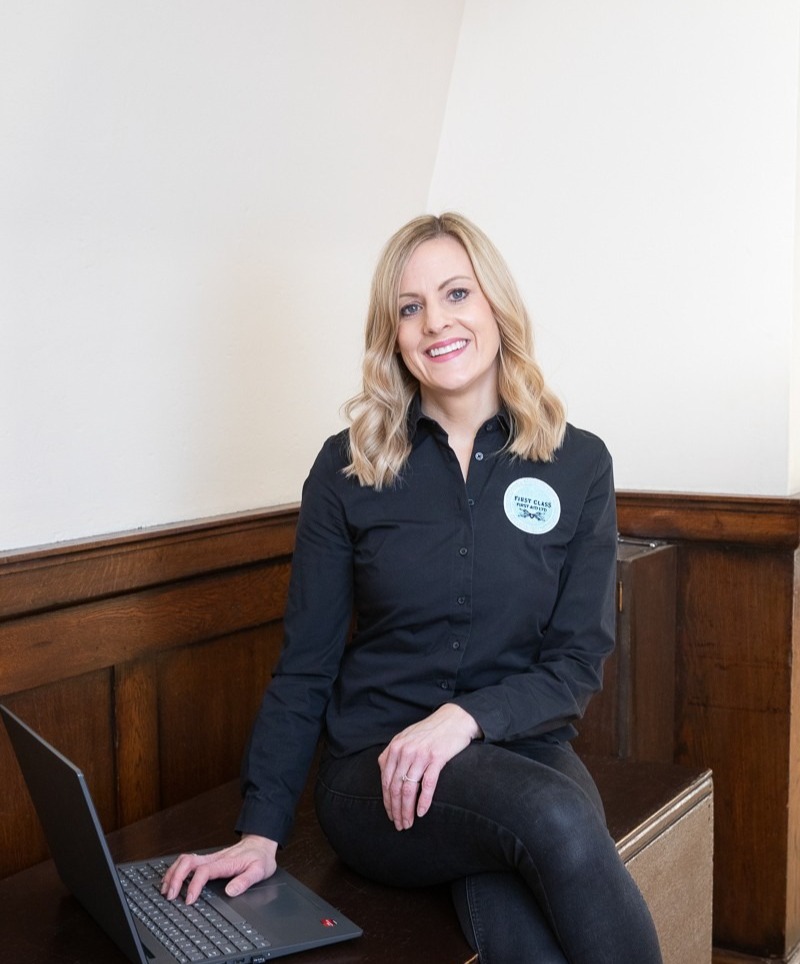
First Class First Aid Ltd: Providing the Knowledge, Confidence and Skills to Make a Real Difference
First aid: a vital skill we may need at work, home and in our day-to-day lives, yet why do some of us shy away from it for fear of ‘getting it wrong’?
Whether you’re anxious about picking up a new set of skills or you’re under the assumption you can rely on someone else who is qualified, first aid training will empower you to know how to act confidently in a situation.
The internet can often be overwhelming with the abundance of medical information and advice we can see across social media platforms, meaning it can become confusing as to what to follow.
Receiving first aid training will equip you with the knowledge and confidence you need to recognise any fake information you may see online and effectively apply your skills if a situation occurred.
I recently spoke to Rachael Karakanna, the Founder of First Class First Aid Ltd, to discover how her courses and training will help you learn vital first aid skills to improve your safety awareness, confidence and knowledge.
What inspired you to launch First Class First Aid Ltd?
My introduction to first aid began in 1999 when I joined Virgin Atlantic Airways as cabin crew. We had to carry out lots of training to be able to deal with anything that happened onboard such as fire fighting, evacuation, restraint and of course first aid.
Much of this was thankfully not needed but first aid was a skill we had to use regularly and I gained first-hand experience in everything I now teach.
First aid or Av-Med as it was known to us (Aviation Medicine) was my favourite part of our training and so when I started to think about hanging up my wings to spend more time with my family, I decided to re-train to teach first aid to others.
As I came to the end of my training covid-19 struck, I was furloughed and then made redundant, and First Class First Aid Ltd was born. It was a little scary to dive in so suddenly, but looking back it was definitely the push I needed.
What is First Class First Aid’s mission?
I believe that first aid is such an essential life skill, my mission is to empower my learners with the knowledge, confidence and skills to make a real difference in an emergency.
What courses/ training do you offer (and who can attend these)?
I offer regulated workplace qualifications and informal classes for parents, carers and children.
The most popular course I deliver is Emergency First Aid at Work which can be delivered in-house for a team, or I also run two public courses a month (at The Nest on Holt Road and Harford Community Centre on Hall Road).
I also deliver a number of other courses including First Aid at Work, Paediatric First Aid and Basic Life Support. All workplace qualifications are Ofqual regulated and HSE compliant.
Paediatric First Aid qualifications meet the requirements of Ofsted and the Early Years Foundation Stage framework. The regulated qualifications can be taken by anyone over the age of 14 years (the minimum age for a workplace first aider is 16 years). And informal classes have no restrictions!
What can people expect at your courses?
My learners can expect a warm, friendly, supportive environment for their training.
My aim is to put people at ease and instil a sense of confidence in their abilities. There is no such thing as a silly question and fun is encouraged!
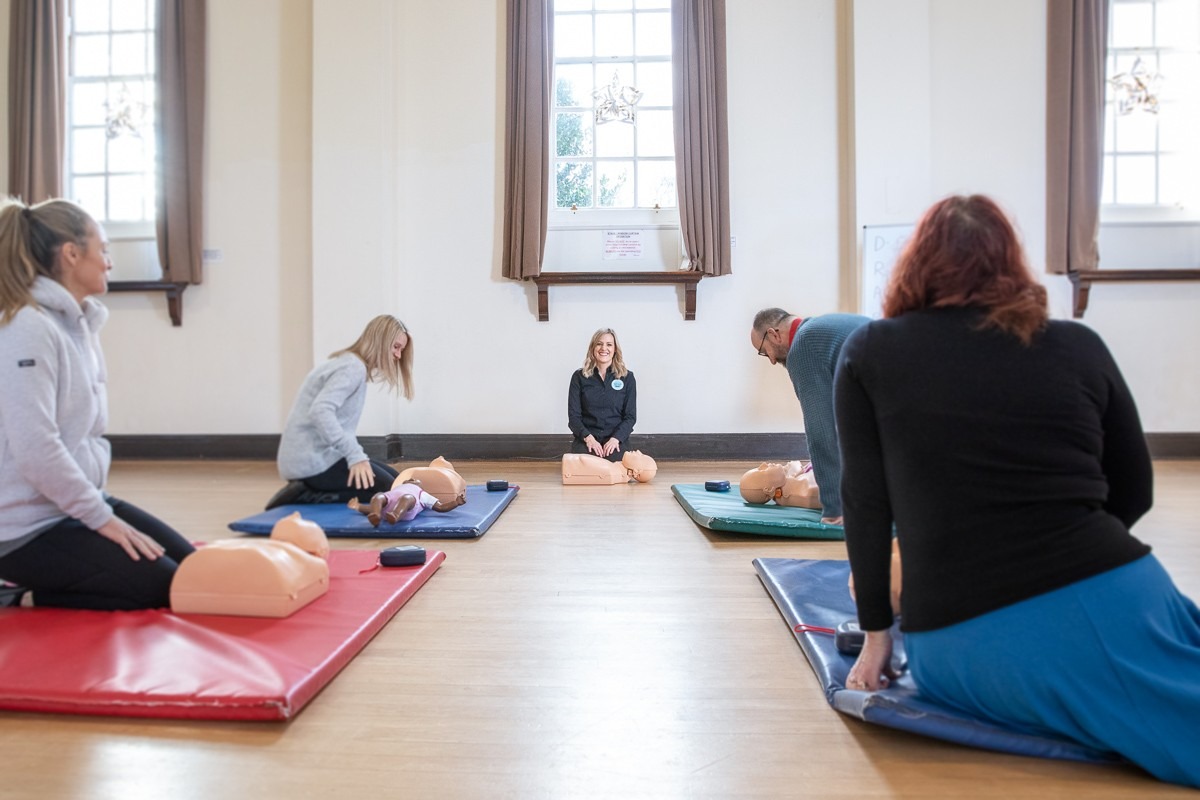
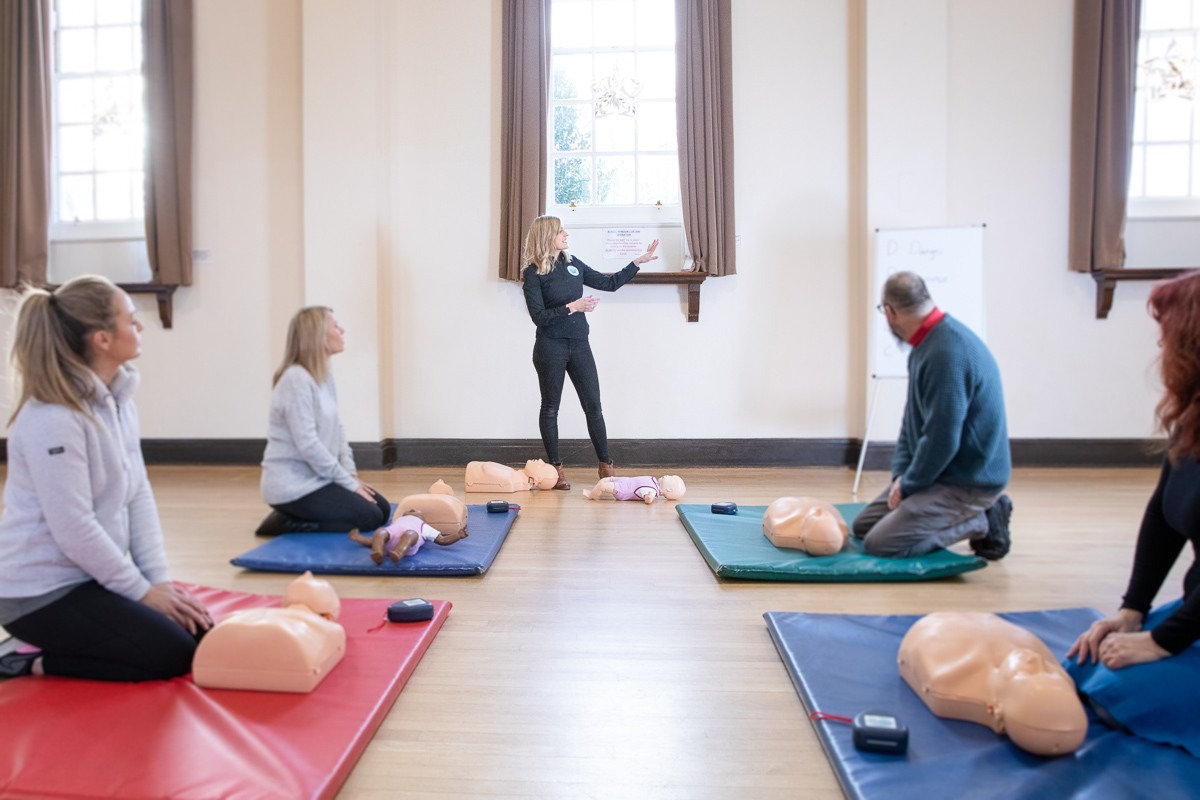
Learning is hands-on and I incorporate lots of activities and scenarios to keep it interesting while embedding those skills.
The training can be adapted to suit different roles and industries. Although there is a set syllabus for regulated qualifications, extra material is often bolted on to suit the workplace. For example: I’ve added Anaphylaxis Awareness for a beekeeper and for aesthetic practitioners, and Musculoskeletal Injury Awareness for jiu-jitsu instructors.
Some people may feel anxious attending a first aid course due to their lack of knowledge or understanding. How do you make your courses feel welcoming for all?
Before the course I contact my learners to give them a bit of info on what to expect and ask if they have any worries/barriers to learning/disabilities so we can make adjustments if needed.
On the day, before we start training, I go through everything we will cover and let everyone know that there are no silly questions, and first aid is a skill for everyone with no previous experience required!
I also let everyone know that sometimes the subject can be triggering, particularly if someone has personal experience, so if anyone needs a break that’s completely fine.
There is also another opportunity to mention injuries/disabilities/barriers to learning in the paperwork we fill out. As well as putting these procedures in place, I’m generally warm and friendly which I hope helps to put my learners at ease.
I know that first aid training can be intimidating so I aim to remove this barrier.
How important is it to learn first aid skills for life?
First aid is such an essential life skill, you never know when you might need it. And being prepared can make such a difference in emergency situations.
Most people carry out first aid training as it’s a requirement for their workplace but 80% of incidents happen in the home.
Knowing we can take care of our loved ones if needed is so reassuring. I often have learners contact me with pride to let me know they’ve used their training, which is always lovely to hear.
How important is it for people to feel calm and confident using first aid?
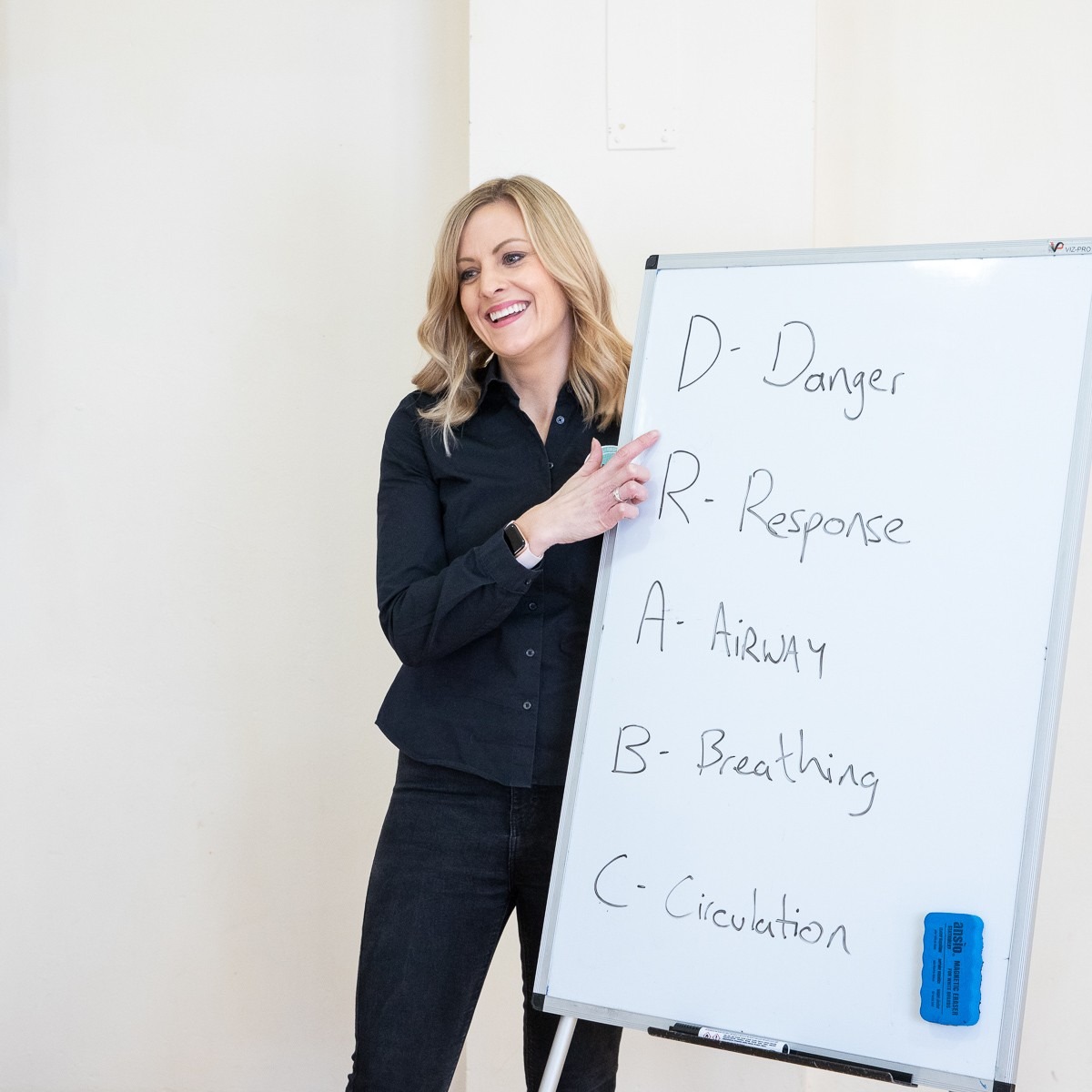
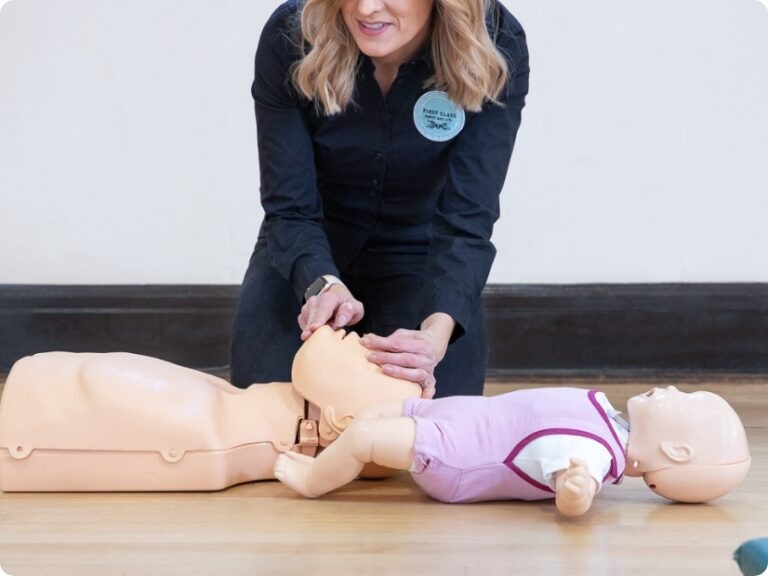
I always tell my learners that staying calm is the first skill in first aid!
It isn’t always easy during an emergency, and they certainly won’t feel calm on the inside, but being able to manage that and proceed with a calm confidence is so beneficial. I teach my learners the techniques to use and questions to ask, and then we put them into practice.
The hands-on scenarios are brilliant for embedding this learning and I can see confidence build in my learners as they physically carry out the skills. This hands-on element is so important, when the skills are needed muscle memory kicks in despite any fear they may feel.
How do you ensure your courses stay up to date? Because of this, how important is continuous learning and improvement to you?
As well as carrying out regular CPD learning and training myself, I teach under an awarding body (First Aid Awards) to ensure my practice and the information I teach is always current and up to date.
The qualifications I award are Ofqual regulated and HSE compliant, which gives my learners and the organisations I work with a professional confidence.
My teaching is externally monitored annually, and my qualification is renewed every three years.
This is all very important to me as the information I share could quite literally be lifesaving. I have a responsibility to ensure everything I teach is current and best practice.
What do you believe is the most damaging stereotype/ assumption when it comes to first aid training (and how can we tackle this)?
Statistically women are less likely to receive bystander help than men in a cardiac arrest situation, therefore more women die from cardiac arrest.
There are three reasons for this, based mainly on incorrect assumptions. One is the fear of using a public access defibrillator on a woman as the chest needs to be exposed. This leads to a fear of sexual assault accusations. Defibrillator use greatly increases the chance of survival so we need to empower men to disregard these fears and proceed with lifesaving defibrillator use.
The SARAH Act 2015 (Social Actions of Responsibility and Heroism) was put in place to legally protect anyone acting in good faith in an emergency situation. There is also a greater fear of causing injury with female casualties, but we need to use the same force on both males and females. And lastly, the symptoms leading up to a cardiac arrest can be more subtle in women which can lead to slower recognition and response.
We need to always check for breathing in a collapsed casualty straight away. To try and reverse this statistic we need to make people aware of these facts, which is an important part of my training courses.
I also have a female CPR manikin so learners can get comfortable with the idea of performing first aid on a female body. I also share this information via my social channels and blog to raise awareness.
What do you hope to achieve through your blogs on your website?
I hope that my blogs are helpful and informative.
I’m passionate about sharing first aid knowledge and by doing this online as well as in person on training courses, I hope to expand my reach and help lots more people feel confident and informed!
What do you hope to achieve in 2026?
First Class First Aid Ltd has been steadily growing since I first began in 2020, so I hope to continue this growth and train even more people!
I now have lots of returning clients coming back for their renewals which is lovely, so I look forward to seeing more learners come back to refresh their skills, as well as welcoming lots of new faces!
To keep up to date with the work of First Class First Aid Ltd, you can head to their Instagram (@first_class_first_aid)!
1 Comment Add a Comment?
Rob
I think I will be booking some training with you!