Exploring the Art Industry With Lucy Lumby
I have always considered myself a creative person.
Growing up, my Christmas and birthday lists were full of sketchbooks, colouring pencils, paints and pencils.
I spent every weekend (and most evenings!) drawing my favourite TV and movie characters and trying to replicate artwork I had seen online and in magazines.
I will always remember the sense of pride and achievement I felt completing a drawing and hurrying downstairs to show my family.
Despite my endless love for art, I was so critical of my work. I would tear pieces in half thinking they were bad and constantly doubt my ability.
This comparison meant that, after completing my Art GCSE, I shied away from the world of art.
I never wanted to lose my creativity, so I began to utilise my imagination and apply it to writing, meaning I could connect with artists in a new way!
Last Christmas, I visited Black Barn Farm’s Christmas Market and met the incredible Lucy Lumby, a Wildlife Artist and Art Therapist based in North Norfolk (and immediately fell in love with her art!). From the gentle but expressive brush strokes to the spectacular range of colours, I could tell that every piece held a unique story.
I recently caught up with Lucy to discover her inspirational journey as an Artist, her views on the use of AI in the art industry, the power art holds and her plans for the year ahead.
When did your journey as an artist begin?
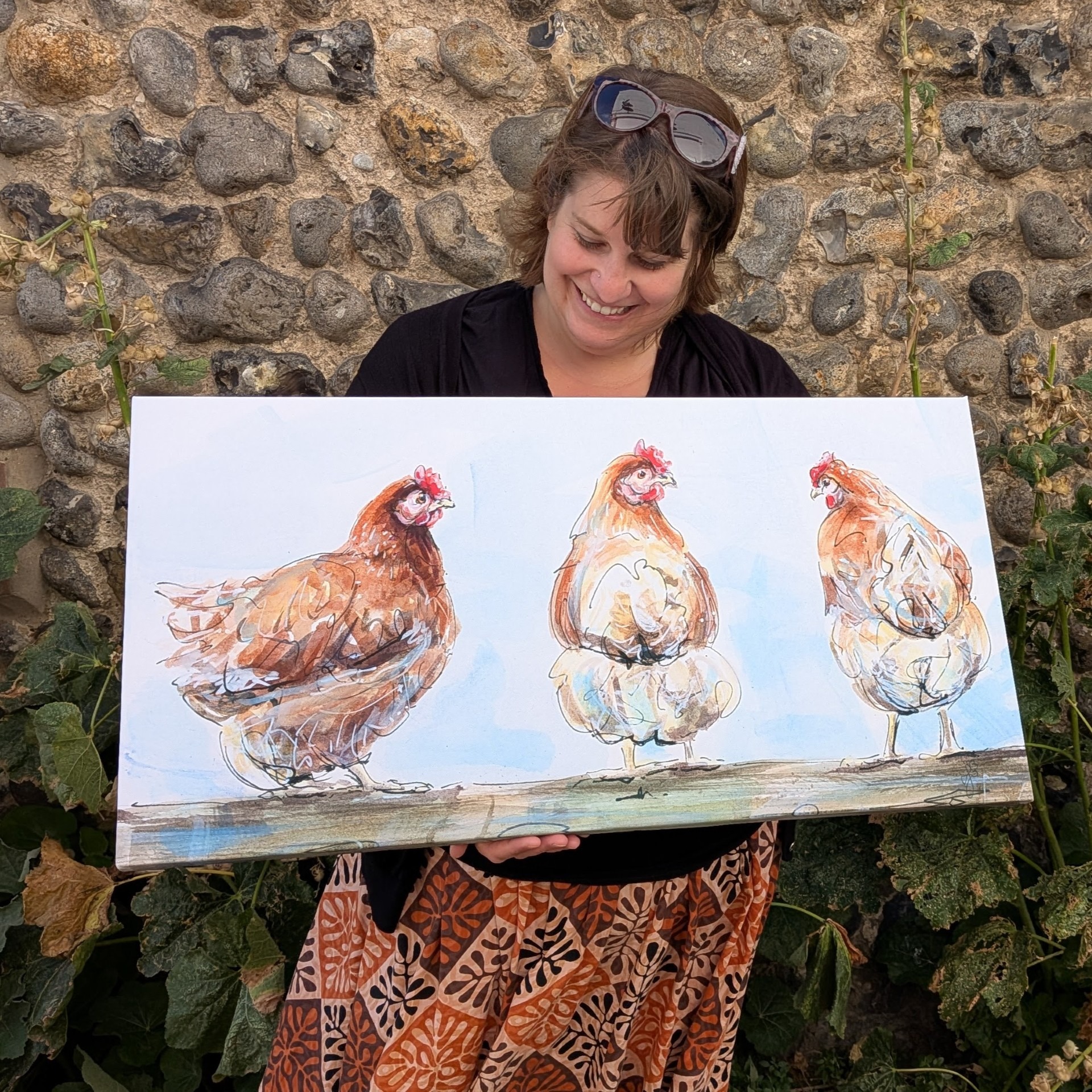
I’ve always loved to draw.
My mum still talks about a horse I drew when I was four, and I spent most of my childhood sketching the characters from Disney video covers.
After my mum and dad divorced, I lived with her, and she let me decorate my bedroom however I wanted. I painted an under‑the‑sea mural across the whole room, and everyone who visited had to add their own fish to the walls — I’ve only just realised how incredible it was to be allowed to do that as a child.
In high school I worked on set design for school productions, did work experience at The Maddermarket Theatre, and it’s just always been something I’ve done and felt drawn to.
Where do you look for inspiration for your artwork?
My dad used to create pen‑and‑ink drawings, selling them alongside his work as a teacher.
He died in 2011, and continuing his artistic practice has become a way for me to stay connected to him. He loved nature and wildlife, and when I was a child, he’d take me fishing, always pointing out kingfishers and the local Norfolk wildlife.
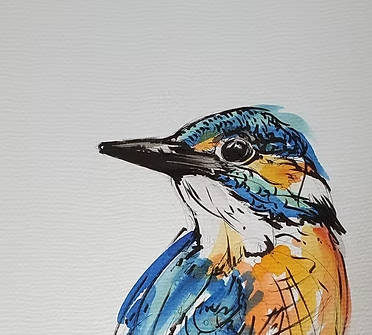
My artist signature is his initials, which I also have tattooed on my hand, so he’s with me whenever I’m creating. My logo — a kingfisher — is another nod to him.
We’re incredibly lucky to have so many beautiful natural spaces on our doorstep here in Norfolk, and I love trying to capture that on paper. A fossil hunt at West Runton beach or a walk around Sheringham Park always sparks new inspiration.
What do you love most about working on commissions for people?
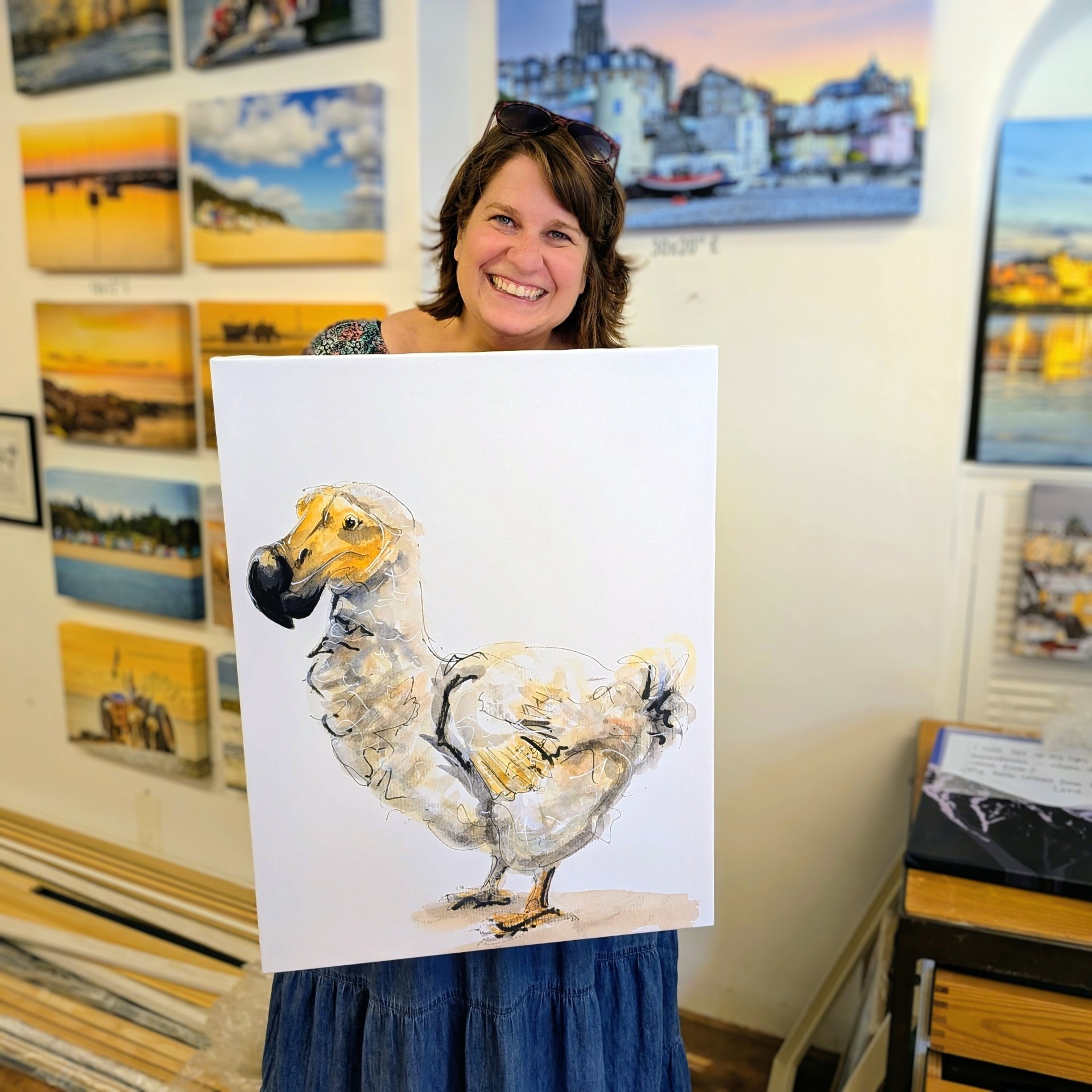
I love the trust involved when someone asks me to paint their pets, especially when it’s a commemorative piece.
I often get quite emotional while I’m working, because I’m always trying to capture the soul of the animal, not just a likeness.
They can be stressful too — when I send the email with the finished painting, I usually have to hide for a moment because I feel a bit sick. My husband says it’s because I care so much, and that if that feeling ever goes, it’s time to stop. I just wish it didn’t affect me quite so much.
I was once asked to paint a keepsake box for someone who had lost a child, and it felt like such a privilege and a responsibility. Each piece stays with me, and I often wonder where my work ends up, hoping it’s loved.
Describe your art in three words!
Loose, expressive and fun!
How has your style and/or focus changed over time?
It’s taken me a long time to find my signature style.
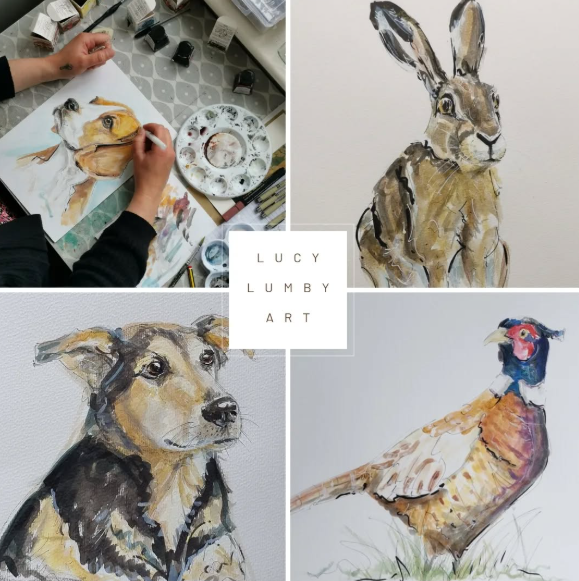
I’ve experimented with so many different forms and media over the years, and this style actually emerged because I was trying to use as little ink as possible.
I enjoy the challenge of working with a limited palette and using negative space and the paper itself as an essential part of the piece.
I developed it further during lockdown, when I found I simply couldn’t stop painting. The panic of being self‑employed and not knowing when I’d next be paid forced me to strip everything back — expensive paints weren’t an option, so I had to be resourceful.
Each painting becomes its own thing; some end up tighter and more detailed, while others stay loose. If I’m painting someone’s dog, it has to look like them, but if I’m painting a pheasant I can put my headphones on and work more freely, which often feels more spontaneous.
I’m always trying to resist the urge to be a crowd‑pleaser. I want to paint what interests me, not just what I think will sell. My “to draw” list even includes a selection of so‑called “ugly” animals — it’s just hard to take risks when your artwork is also your income.
How do you deal with any creative blocks?
I’m a bit of a night owl.
At university I’d often be up in the early hours making model boxes, covered in foamboard and glue, but family life doesn’t really suit that way of working anymore, so I try to keep to a normal working day.
My desk is always set up and ready, but I’ve learned that it’s okay to step away — have a cup of tea, take the dog for a walk, and come back to it.
Art isn’t a production line, and sometimes it just doesn’t happen. Not every painting land, but when it does, you know instantly.
When I painted the fox, for example, I woke up at 3am with a sudden need to paint. He ended up becoming one of my most popular prints, and we have the original hanging in our home. I suppose it’s a reminder that painting when you feel it — and taking time out when you don’t — really does show in the work.
What are some of your proudest achievements during your journey as an artist?
The biggest achievement is simply surviving twenty years as a self‑employed artist.
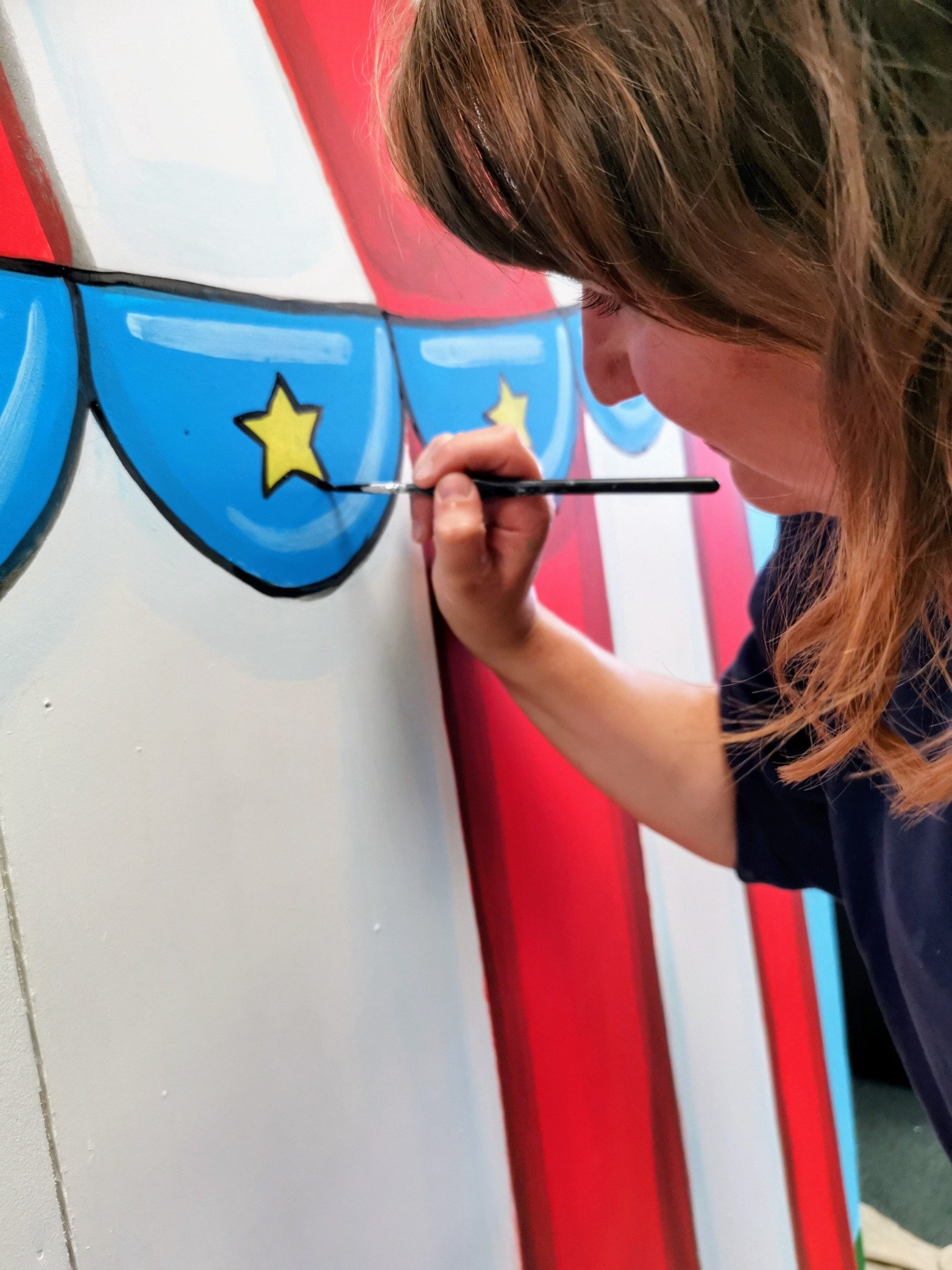
I’m incredibly proud of my early career and all the large scenic projects I worked on across theatre, attractions, and film.
You don’t often stumble into your dream job, but I did quite quickly after university when I found the perfect company — one I was determined to work for. Through them I worked both in the workshop and on site across Europe on a number of major projects.
I’m especially proud of being brave enough to say “yes” to becoming Head of Props for a company in Dubai. It came at exactly the right time in my life and gave me so much confidence and experience. I worked on big projects with people from all over the world, and the job also funded some travelling (although the older, more sensible version of me thinks maybe I should have put it towards a house deposit or a pension!).
When I first met my husband, he was impressed that I was on IMDb for a film I’d worked on — so I suppose that helped bag me him, which feels like a bonus achievement. I’m also proud of completing my MA in Art Psychotherapy while having our son… not a multitasking challenge I’d recommend…
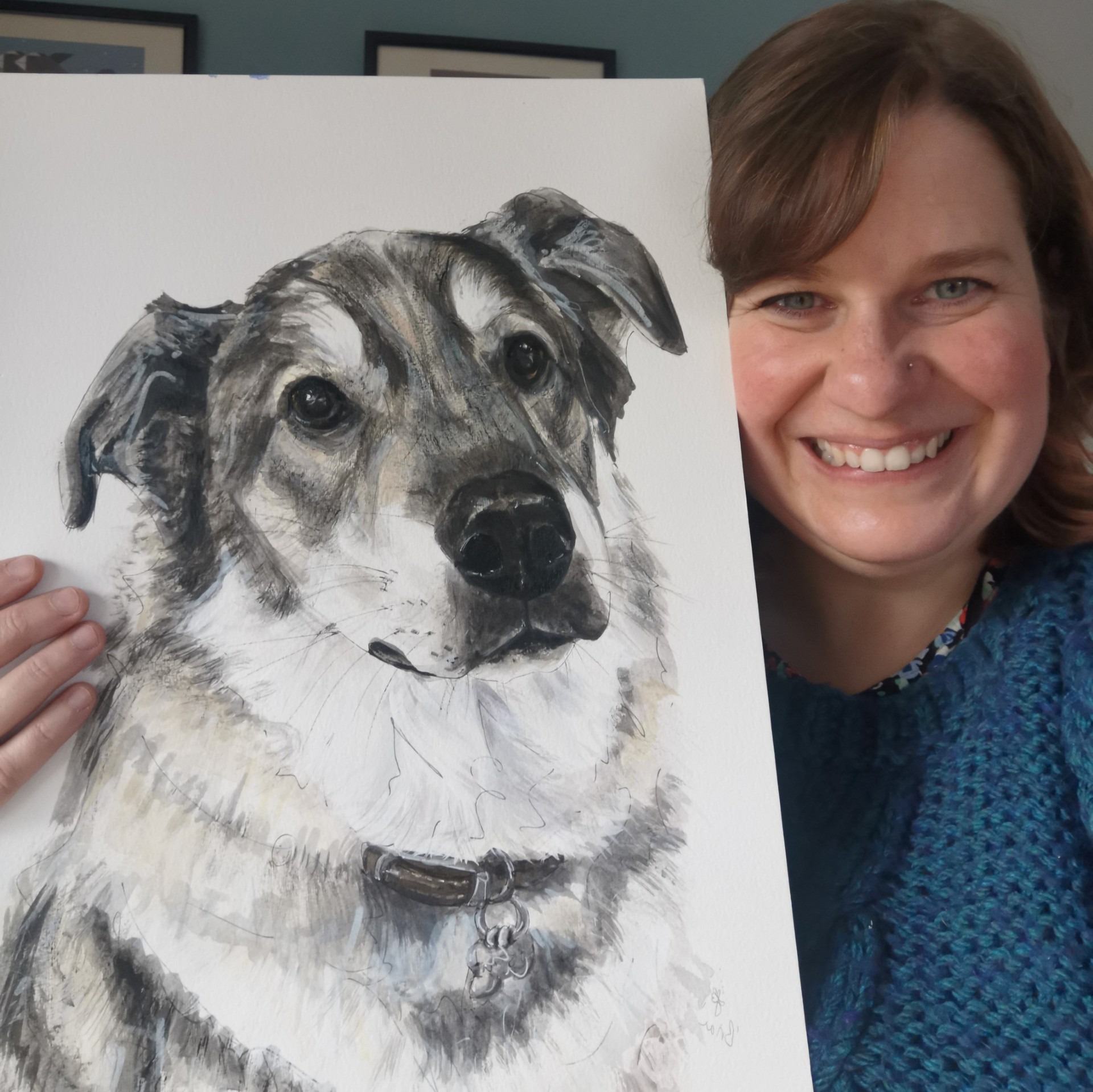
What does a day in the studio look like for you?
I work from my little desk in the dining room at home.
Because my husband works from home too, we’re quite strict with our working hours. I settle in once our son is at school and work until he’s home, sometimes carrying on in the evening depending on what I’ve got on. There are plenty of cups of tea, cuddles with our dog Martha, and a chat with our lovely post lady, but I’m pretty focused on using my time well — whether that’s painting, updating my website, doing accounts, art therapy work, or promoting my business.
My favourite days are when I have a commission to work on because I can pop my headphones on and get completely immersed in the painting.
What do you believe is the most damaging stereotype in the art industry?
I think the rise of social media has created the impression that art is easy and everything turns out perfectly first time.
I’m really glad I grew up before social media, because I think it would have undermined my confidence.
I love figuring things out through experimentation, but there’s now this expectation that you should instantly know how to do everything, and that everyone is brilliant straight away. That can be so damaging for young artists, because you only learn through time, practice, and mistakes.
I’m also grateful that I wasn’t aware of all the competition when I was younger. My feeds are now full of other artists offering pet portraits or wildlife art, and it definitely knocks my confidence — so I can only imagine how hard it must feel when you’re just starting out.
I think we need to encourage making mistakes and show the process behind our images — the workings and the failings — not just the pieces that turn out well.
What power does art hold?
As an Art Therapist, I feel that art holds enormous power for both the individual and the audience.
There’s nothing quite like connecting with someone as they experiment with a material for the first time, or watching them feel proud of what they’ve created.
I feel privileged to have worked alongside people as they use art to explore thoughts and feelings connected to trauma — it’s such a unique and meaningful form of expression.
Everyone can create art, and everyone can benefit from a creative outlet, whether that’s painting, sculpting, reading, performing, or anything in between.
I’m really keen that art isn’t viewed purely in terms of being “good,” but that we also value how it feels to make it.
In my own life, I often have to practise what I preach and create art for my own wellbeing. That’s taken some unpicking, because for so long my art has been tied to earning an income, but there’s real value in allowing yourself to explore, express, and simply create.
Art can communicate things that words sometimes can’t.
How do you effectively balance the creative and business side of art?
That’s a tricky one.
There’s so much work involved beyond the creative side, especially now that having an online presence is so important — and learning all of that is a challenge if you’re a bit older like me!
Luckily, I’m used to the accounts side after doing it for so many years, but being an independent artist means you’re your own promoter, website builder, events booker, admin assistant… and you’re not paid for all the hours you put in.
The hardest part is being paid your worth and valuing your time. I find that balance really difficult.
I wouldn’t hesitate to pay the quoted price for a trade or a product, but there’s something about art that makes people feel it can be haggled, and it’s hard to stand your ground. It’s something I’m learning to be stronger about.
How does it feel to have your artwork displayed in local cafes across Norfolk?
I’m so excited to have my artwork displayed in two beautiful venues in Norfolk — The Cosy Café in Holt and Artisan Bistro at Alby.
It’s lovely seeing my paintings hanging on a wall in a real space rather than in a blustery gazebo or tucked away in a portfolio. Having them out there feels validating, and it’s been such a boost for my self‑confidence.
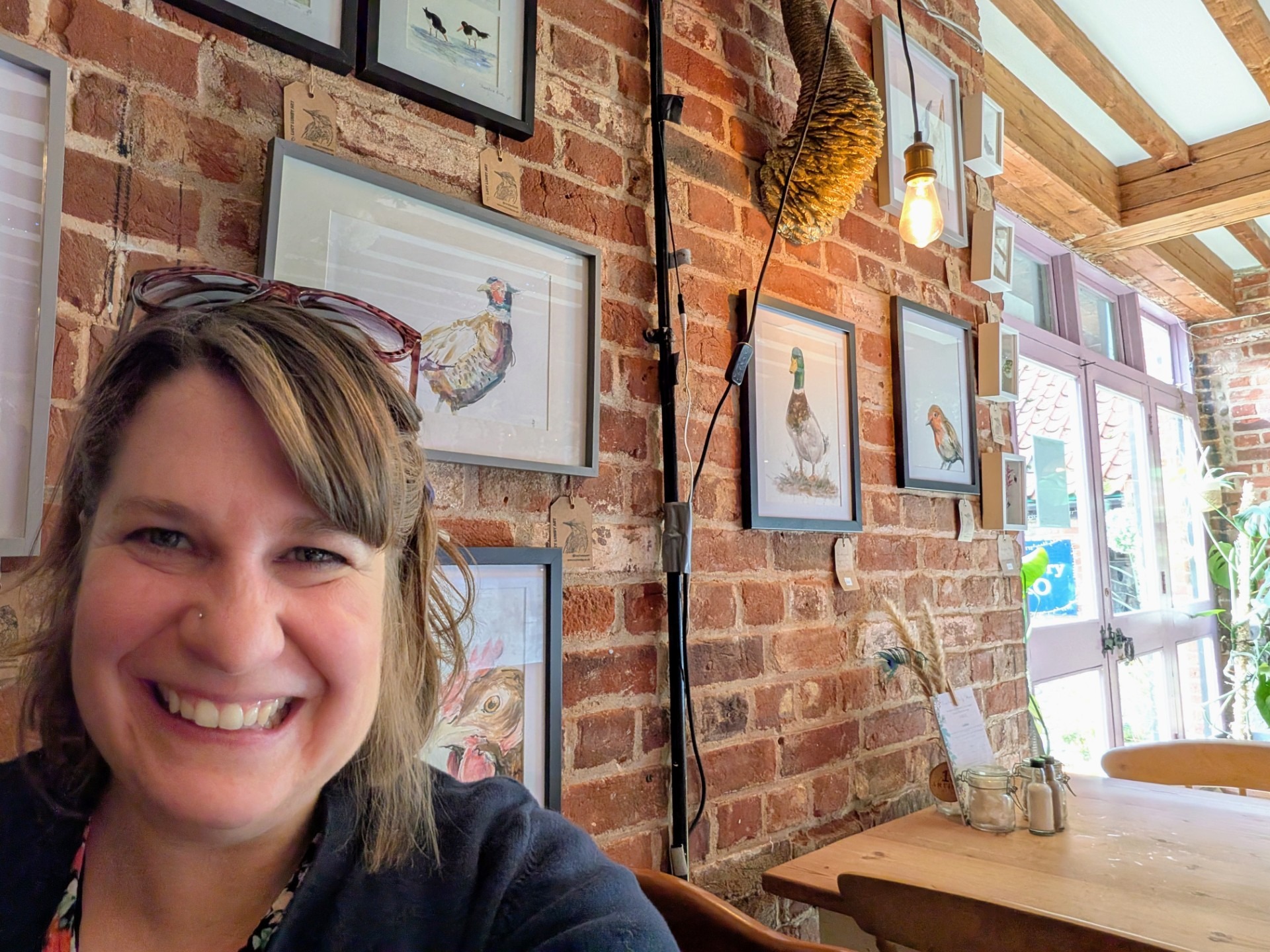
It’s also been wonderful connecting with more people and feeling supported as a small business — there’s something special about another business choosing to champion your work.
I still get a buzz every time someone buys a print or an original to hang on their wall, and that feeling never goes away. It’s especially lovely when someone “clicks” with a piece and even comes back for two or three more.
Having paintings in venues is definitely something I’d like to do more of. It’s just nice knowing they’re being enjoyed — and if they sell, that’s a bonus.
What do you enjoy most about attending local markets?
We’re so lucky to have such a bustling market scene throughout Norfolk, and it’s incredibly exciting to be part of it.
I love the supportive community of makers I’ve met, and I’ve made some really lovely friends through the markets. They understand what a wonderfully random job it is, and just how much work, effort, and determination goes into each event.
It’s always a gamble — will the weather behave? Will I make enough to cover the pitch fee? Will people like my work? But it becomes strangely addictive.
It can also be quite a lonely job, so having maker friends around you is essential. They keep you company and make you feel part of something.
I spend a lot of time chatting to people who visit my stall, and I think it’s important not to exist solely online. Talking to people shows who you are as a person as well as an artist, and that matters when someone is trusting you to paint something meaningful for them. You also never know who you’re talking to or what opportunities might come from a single conversation.
The rise of AI has divided many industries. What impact has this piece of technology had on the art industry (and how can we reduce its damage)?
When I was painting scenic cloths for a company in 2012, they shifted to projected backdrops, and it was such a shame to see that element disappear from the stage. We didn’t paint any more for them after that.
As both an artist and an Art Therapist, I feel that AI misses the process of creating. It does worry me with pet portraits — you could have one printed for pennies with a filter.
I’ll never forget a customer saying, “If I wanted a replica, I would have printed a photograph. I wanted what you saw, and all the nuances in colour and tone.” I just hope people who feel that way continue to support artists and small brands. Once they’re gone, and everything becomes mass‑produced, they will be missed.
There are so many incredibly hardworking, talented people out there, but they can only continue if they’re supported.
During lockdown there was a real buzz around buying local, and I think we need more of that energy again.
What do you love about the art community across Norwich and Norfolk?
I was lucky enough to do the Art Foundation course at NSAD back in early 2000, and it was wonderful to be part of that scene, surrounded by the amazing theatres and gig venues in Norwich.
Norfolk has such a wealth of artists, and there’s always something happening — open studios, exhibitions, the Sainsbury Centre, and so many independent businesses and collectives.
I’m fortunate to be part of both the Art Therapy and Art communities, and it still amazes me how many of us there are — even if we’re a bit spread out!
I’ve loved being involved with Norwich Lanes too; it feels like a true celebration of independent creativity in the city and gives you a real sense of being part of something special.
What one piece of advice would you give to any aspiring artists?
Be okay with criticism and be kind to yourself. There’s something about art that makes people voice their opinions very freely.
If you’re doing markets and stalls, remember it takes real courage to put yourself out there in the first place. It’s a bit like being on display, and there’s often a surprising lack of filter in some of the passing comments. Not everyone is going to like everything — you just have to find your people and remember why you’re doing it. And if someone says, “So-and-so could do that,” just remember: they’re not doing it. You are. Hold on to that, and remember that everyone’s a critic.
Do you have any plans for 2026?
I’m currently creating wildlife illustrations for an author in Cambridge, and I can’t wait to see them printed in her book.
I’m also promoting my art therapy work, and I’m hoping to take on more scenic projects to satisfy my big‑painting itch. I’d love to secure funding to offer outreach sessions or group work across Norfolk — art sessions that help build confidence, connection, and wellbeing.
Art is so important, and I genuinely love running groups. I’d really like to offer more of my services and engage with people out in the real world.
To keep up to date with the fantastic work of Lucy, you can check out her Instagram (@lucylumbyart)!
Post a comment